USB is also a bit stupid...
How come the USB connector is made to be non-reversible? But they didn't think about it when it was created?
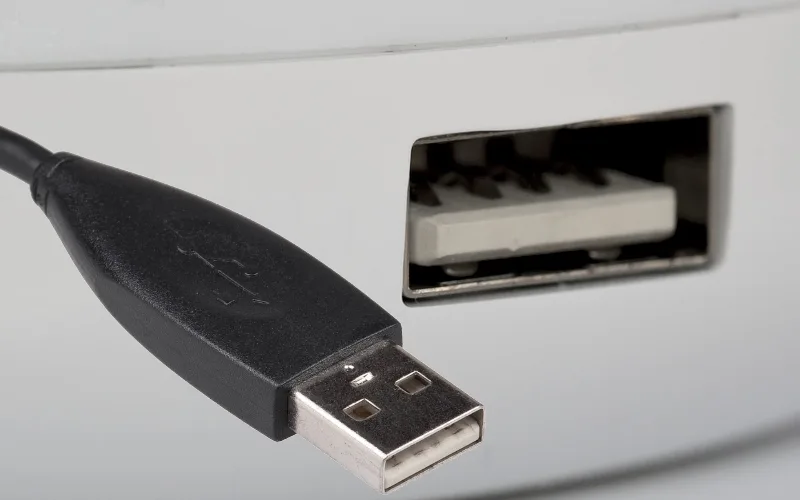
If you use any device that connects to another via a wire, then you've definitely come across a USB connector of one kind or another. And what is the most disgusting thing about him? In any case, we have to turn the connector the right way. And according to Murphy's Law, we always turn it first - wrong. Why is that? But those who invented the thing didn't think about it?
If we want to understand what is happening, we need to go a bit into history. We got the first USB devices into everyday use in 1996, which were the first devices to meet the USB 1.0 standard, and Microsoft also supported the issue with drivers in Windows 95 OSR 2.1. But the matter did not catch on very well at the beginning, so we can mark the year 1998 as the true beginning, when USB 1.1 was created.
But why was USB developed in the first place? Before that, there was real confusion in the field of connections. Mice and keyboards had their own connectors (PS/2), printers their own (parallel), gaming sticks and similar devices a third (serial) and something else could be found. The problem with so many interfaces was, on the one hand, that it was necessary for each of them to have its own driver, which had nothing in common with the others, and apart from that, these connectors allowed connecting more or less only one device of the same type. If, for example, we wanted to have two printers connected (say, a dot matrix and a laser), we had to purchase special manual or automatic toggle switches. And it was similar with other devices. Various companies tried to solve the matter and there were quite a few promising solutions, such as SCSI, but they all had their limitations or were useful for only certain purposes.
USB was the first to provide as much of a universal solution as it enabled the connection of all of the previously listed devices, as well as a bunch of other, new ones (cameras, external disks, Wi-Fi receivers...) through one type of connector, which was also very small, so that there could be several of them in the computer. In addition, it also enabled the so-called "Plug and Play", i.e. the operation of the device without special installation of drivers or their automatic installation. We called the thing "Plug and Pray" for the first few years because it worked very "selectively", but over the years the thing got better.
But so far we have not answered the question why the connector should not be turned. Of course, the designers thought about it, but they realized that doubling the pins and increasing the number of wires in the cables would not be acceptable. And the price was very important, because both equipment manufacturers and users had to be convinced to abandon the existing standards and use the new one. And price is a very important factor in such cases. And it obviously worked, because now, in addition to the USB connectors on computers, we more or less only need a screen and network connector, and everything else runs via USB. Not to mention other devices.
But why didn't they change the matter when the thing caught on and everyone else more or less went into oblivion? For backwards compatibility, of course. A new connector, one that can be turned, would mean that the existing devices would no longer be useful, which of course is not possible. The only solution is to introduce a new connector, and the transition to it is parallel and gradual. And we are in this phase now, when we have more and more devices that support USB-C, which, among other things, also allows the connectors to be reversed, but we still have the classic USB-A connectors. And we will, if there is no drastic cut, for some time...▪
AI translated