
AI has an electricity meter too: when the grid limits growth
AI growth needs servers, cooling and electricity. The IEA’s report explains why a grid connection can matter as much as the chip itself.
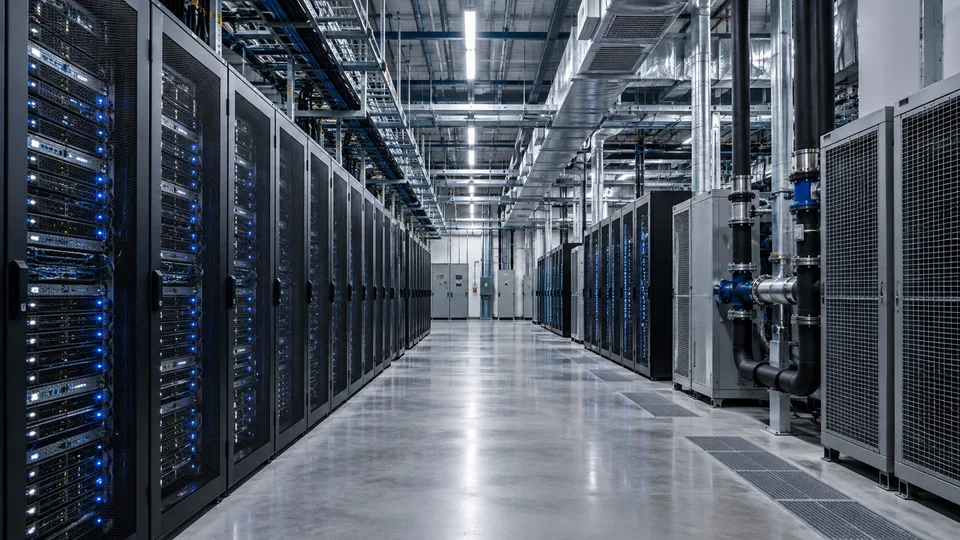
Artificial intelligence brings models, chips and major investments to mind. Behind them sits tangible infrastructure: a building, cooling equipment, a power connection and a grid that can support it all. Digital growth has physical requirements.
In its 2025 Energy and AI report, the International Energy Agency estimated that data centres consumed about 415 TWh of electricity in 2024, or 1.5% of global consumption. Its base case projects roughly 945 TWh by 2030. This is a projection, not consumption already recorded, and covers data centres serving various digital services, not AI alone. AI is an important driver of growth in the report. Source: IEA.
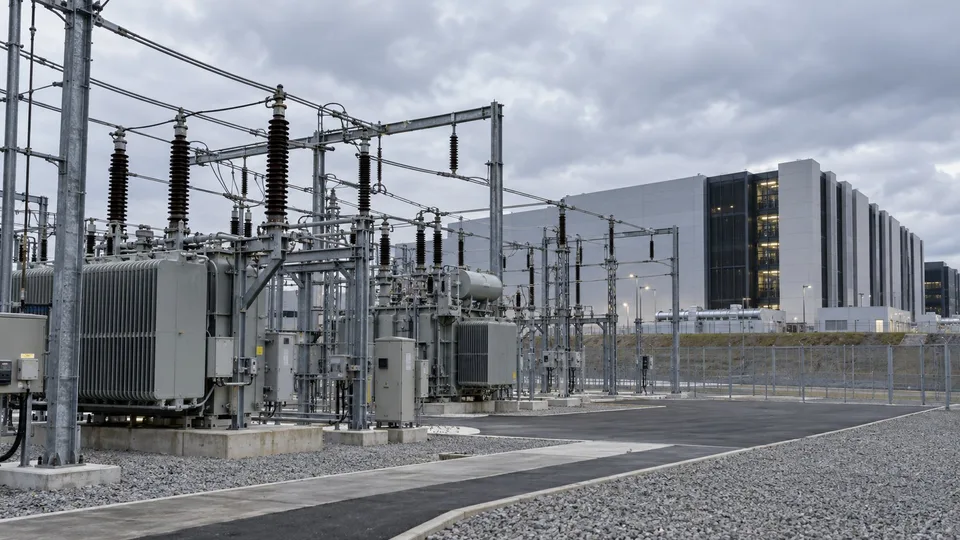
A server without power is expensive furniture
For an investor, the question is not just how much computing power can be purchased. It also matters when that capacity can start operating. A delayed connection can postpone a centre’s opening even when other parts of the project are ready.
This changes how locations are assessed. Cheap land does not automatically mean a cheap project. Available power, cooling options and infrastructure belong in the calculation. Our business interpretation is straightforward: site constraints need to be considered at the start because later adjustments can change the economics.
A large global number hides a local question
A share of worldwide electricity consumption cannot tell us what happens at a particular connection. A data centre draws power in a specific place. Local capacity therefore matters alongside global generation growth.
The IEA also highlights geographic concentration and the risk of delays from grid constraints. Its report provides useful context for understanding risk, but does not forecast the price of an individual AI subscription or electricity in Slovenia. Source: IEA.
What about a company that simply uses AI?
A small business will not build its own data centre. It can still consider workflow resilience when choosing a provider. What happens if the service is unavailable? Can data be exported? Which tasks can employees temporarily complete another way?
Imagine a fictional retailer using AI to draft product descriptions. A brief outage might delay work. If that tool becomes the only way to run the whole process, dependence is greater. The difference lies in workflow design, not just response speed.
Efficiency also starts with task selection
Not every short task needs a long answer or several successive versions. Clear instructions, an appropriate scope and reusable verified outputs can reduce unnecessary work. This is not a calculation of energy saved by an individual prompt: that would require specific information about the model and infrastructure.
The business question is therefore twofold: what can AI do, and how reliably can the service be delivered? Between a new model’s presentation and its everyday use, there is also a power cable.
Video: Energy & AI
Video in English.
This article was created with AI assistance.
AI translated